
URLs are the foundation of how apps and platforms connect users to content. When you need to shorten, brand, and track those links at scale, a URL shortener API gives you the tools to do it programmatically without sacrificing control.
URL shortener APIs handle more than just creating short links. They help you manage links in bulk, generate QR codes, and track performance with detailed analytics—all while keeping your brand front and center. This guide breaks down how to choose the right URL shortener API for your tech stack and reviews the top 9 options developers are using in 2025.
What is a URL shortener API?
A URL shortener API is a set of protocols that lets you create, manage, and track shortened links programmatically. Instead of manually copying and pasting links into a shortening service, you integrate link shortening directly into your application through HTTP requests.
With a URL shortener API, you can:
- Create branded short links using your custom domain
- Update destinations for existing shortened links
- Generate thousands of links in bulk
- Pull click analytics and performance data
- Create scannable QR codes linked to your shortened URLs
APIs typically return structured responses in JSON format, making shortened links easy to use in mobile apps, web tools, and automated campaigns. This approach is particularly valuable in high-volume environments like CRMs, SMS platforms, and link-in-bio tools that need scalable link creation.
How to choose the right URL shortener API
URL shortener APIs vary widely in capability. A solution that works for a personal project won't scale for enterprise campaign automation. The right choice depends on your technical requirements and business goals. Finding the best URL shortener API means evaluating several key factors.
This section covers what to look for—from documentation and rate limits to branding features and compliance.
Technical requirements for a robust URL shortener API
A reliable URL shortener API needs a strong technical foundation. Before evaluating features, check whether the API integrates smoothly with your existing stack and can scale as your needs grow. These core technical elements determine how usable and resilient an API will be in production.
- Rate limits and scalability: Can it handle high-volume link creation? How does it throttle increased traffic?
- Authentication methods: Does it use OAuth, API keys, or tokens?
- Documentation quality: Are endpoints well-documented? Are there quick-start guides and SDKs?
- Response formats and error handling: Does the API support RESTful JSON with clear, consistent status codes?
- API reliability and uptime: What uptime guarantees exist? Look for 99.9%+ uptime and transparent service-level agreements.
A solid technical backbone creates a consistent experience for your team and your audience.
Feature requirements for a successful URL shortener API
Once you've verified the API integrates with your tech stack, evaluate what it can do for your team. These features determine whether it's the right toolkit for your needs.
- Custom domains and branded links: Essential for building brand trust
- Analytics and click tracking: Real-time performance data and UTM support
- Bulk link creation: Necessary for large-scale campaigns like bulk SMS
- Link editing and management: Update destinations, set expirations, and enable retargeting to create consistent cross-channel experiences
- QR code generation: Turn short links into scannable physical-digital bridges
Choose an API provider that gives your team everything it needs to succeed.
Pricing and business factors that impact your URL shortener API
Even the best API won't help if it doesn't fit your budget or compliance requirements. These business considerations ensure you're set up for long-term usability.
- Free tier limitations: Can you test at scale before upgrading?
- Pricing structure: Does it charge per link, per feature, or offer flat-rate plans?
- Enterprise features and compliance: Look for SOC2, GDPR, HIPAA, or custom SLAs
- Support quality: Are engineers available? Is there live chat or ticketing?
Now let's look at what's available.
Top URL shortener APIs
URL shortener APIs can be a valuable resource for developers looking to integrate URL-shortening functionality into their applications or services. The following list includes the most trusted, reliable, and innovative URL shortener APIs:
1. Rebrandly API (best overall)
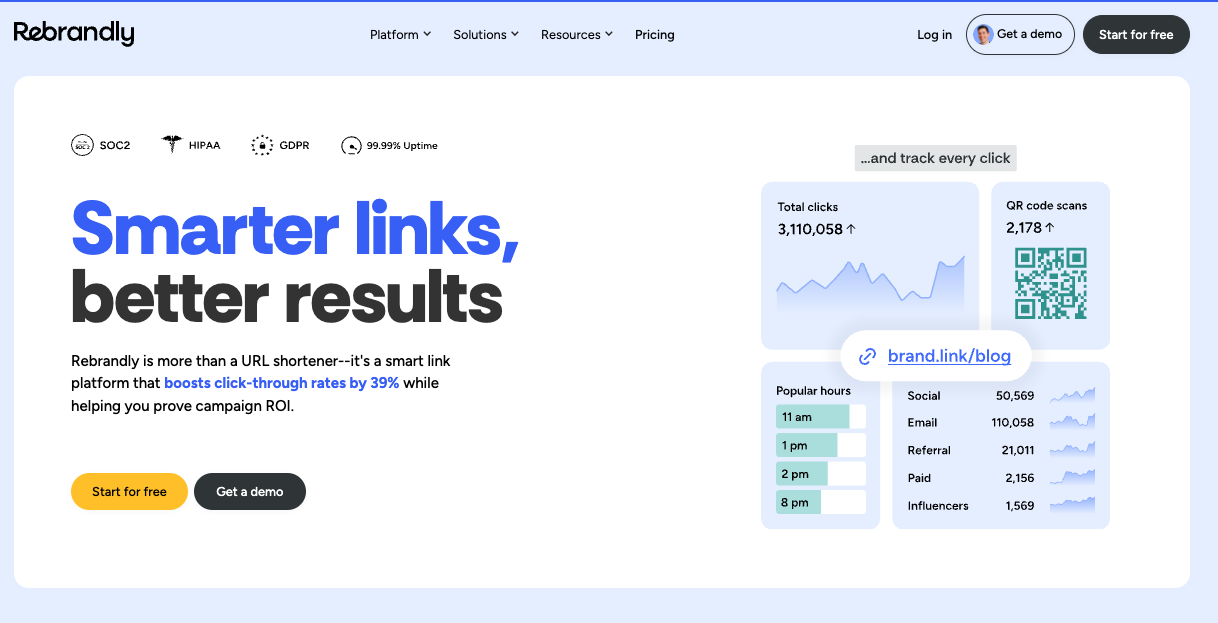
Thousands of developers trust Rebrandly's API for branded domains, real-time analytics, traffic routing, link retargeting, and secure, compliant infrastructure. With 99.99% uptime—the best in the industry—and the ability to scale up to 100,000 links per second on enterprise plans, Rebrandly delivers mission-critical link infrastructure.
Key features:
- SOC 2 Type II, HIPAA, and GDPR compliant
- 20,000 calls/hour (10 calls/sec) on standard plans
- Scales to 100,000 links/sec on enterprise plans
- 99.99% uptime
- Branded short links with custom domains
- Server-to-server analytics with unlimited data retention
- QR code generation
Pricing:
- Free tier available. Paid plans scale with usage and features.
Pros:
- Feature-rich with industry-leading uptime
- Best-in-class branding and analytics
- Developer-first documentation
- Enterprise-grade scalability and compliance
Cons:
- Advanced features require paid plans
Ready to get started? Check out the Rebrandly Developer Hub for API documentation, code examples, and SDKs, including our Python SDK.
2. Bitly API

A longtime leader in link shortening with strong brand recognition and solid analytics support. Read our detailed Bitly API review for more information.
Rate limits:
- 5 links per month on free tier
- 1,000 API requests per month
Pros:
- Familiar platform with industry history
- Solid analytics on paid tiers
Cons:
- Very limited free tier (only 5 links/month)
- No traffic routing feature
3. Yourls API

Self-hosted PHP solution offering complete control with an open source toolkit.
Pros:
- Fully customizable and open source
- No external service dependency
Cons:
- Requires server setup and technical expertise
- Ongoing maintenance overhead
4. Short.io

Full-featured with real-time tracking and robust team collaboration tools.
Pros:
- Multiple custom domains supported
- Event tracking included
Cons:
- Higher tiers needed for full capabilities
5. Sniply API

Add pop-up call-to-action overlays on shared short links.
Pros:
- Unique marketing capabilities
Cons:
- Not a traditional shortener
- Limited developer features
6. Cuttly API
“Simplify your links, track & manage them.”
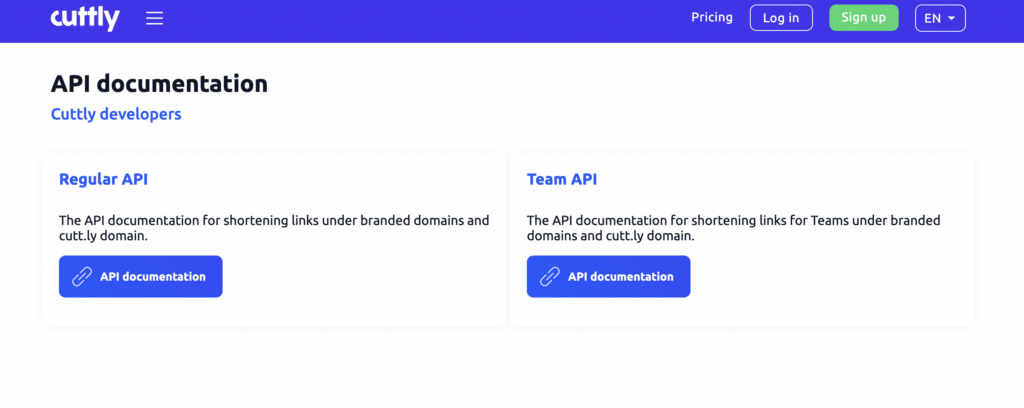
All-in-one link management with QR generation and link categorization.
Pros:
- QR codes included in free tier
- Simple dashboard for manual edits
Cons:
- Limited API rate caps
7. TinyURL API

A legacy shortener that recently added API support. Learn more in our TinyURL API review.
Pros:
- Basic free service
- No account required
Cons:
- Minimal analytics and tracking
- No brand customization
8. YOURLS API
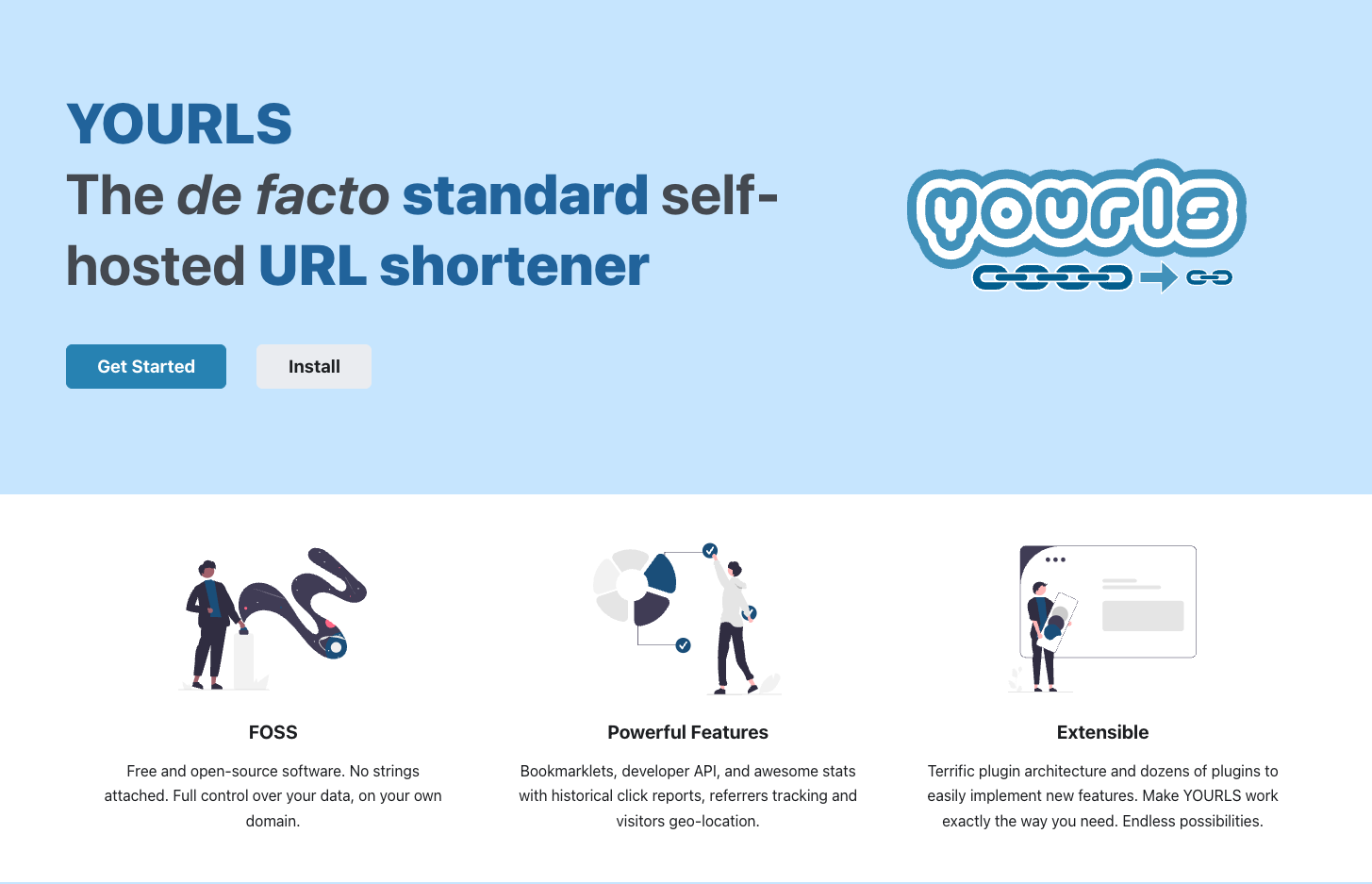
Self-hosted PHP solution offering complete control with an open source toolkit.
Pros:
- Fully customizable and open source
- No external service dependency
Cons:
- Requires server setup and technical expertise
- Ongoing maintenance overhead
9. T.ly API
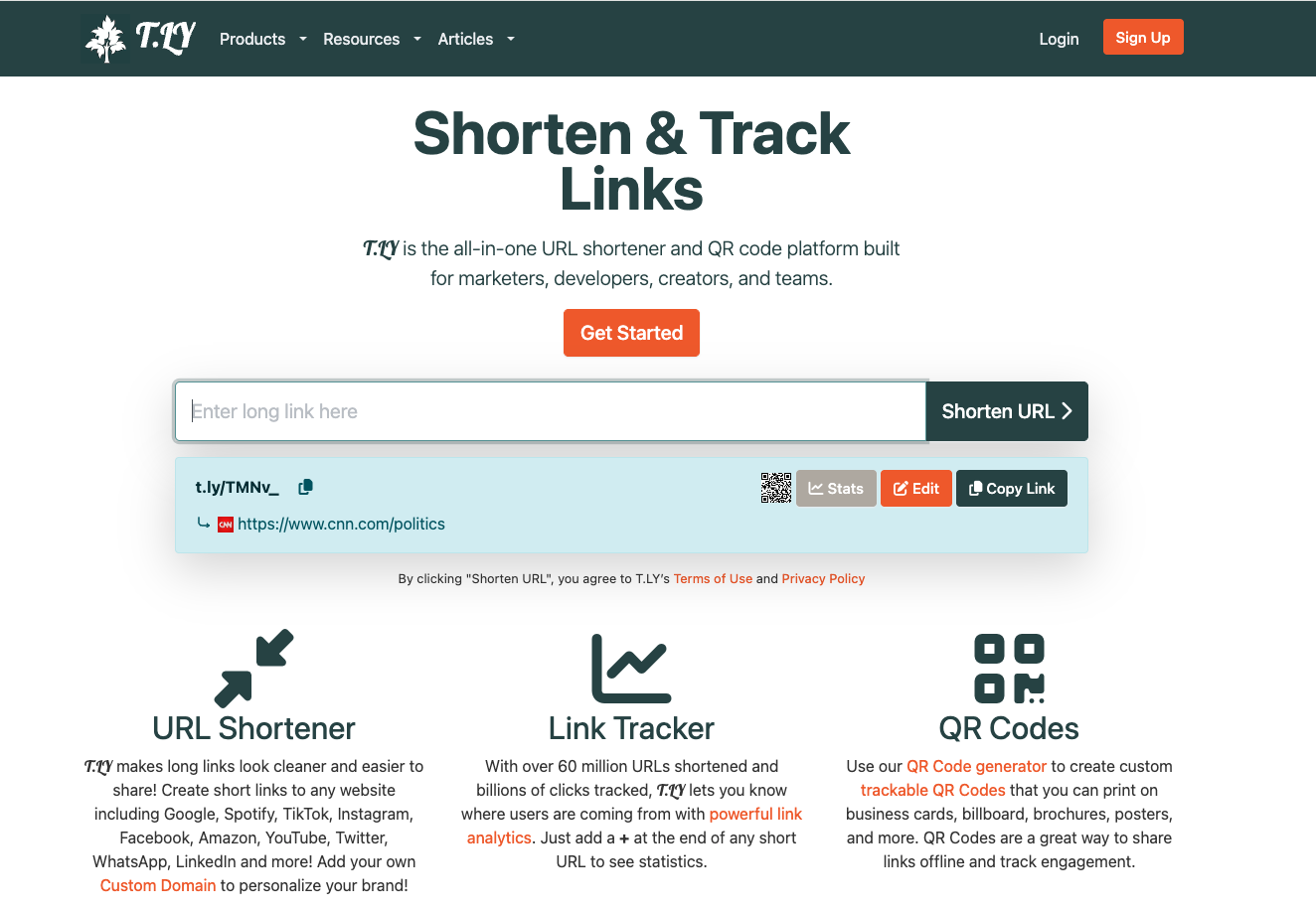
Modern API with developer-friendly features and a generous free tier.
Pros:
- Analytics included on all plans
- Bulk shortening on select tiers
Cons:
- Less brand visibility than larger platforms.
Limited features
Quick start: Getting started with the Rebrandly API
Setting up the Rebrandly URL shortener API is straightforward. Here's how.
- Get your API key
Sign in to your Rebrandly account, navigate to Account Settings, and generate an API key. This key authenticates your requests and grants API access. - Add authentication to your requests
Include your API key in the request headers. Most calls require a Content-Type: application/json header along with your API key. - Start making API requests
Use standard HTTP methods like POST, GET, or DELETE to create and manage links, domains, and more. Follow the endpoint structure in the Rebrandly Developer Hub. - Handle and parse the response
Rebrandly returns clean JSON responses with status codes. Use this data to update your UI, store results, or trigger other actions in your app.
Check out full code examples and SDKs in the Rebrandly Developer Hub.
Choose the right URL shortener API for your team
If you need a URL shortener API that covers scalability, custom domains, analytics, QR codes, and compliance, Rebrandly is the best choice. It balances power and ease of use for professional deployment at scale.
Other solid alternatives depending on your goals:
- Use YOURLS for total control in a self-hosted environment
- Try is.gd for a quick, no-auth solution
- Choose Sniply to overlay CTAs on every link
A URL shortener API is an essential developer tool—connecting users with content through every click, scan, and share. Understand your needs to choose the right one.
Ready to experience the power of Rebrandly's API? Start your free trial today and see how easy it is to create, manage, and track branded short links at scale.