
2025 was the year AI rewrote the rules.
Not gradually or predictably. One moment, we were all running our businesses with tools and strategies we understood. Next, everything had changed faster than most companies could adapt.
Search engines transformed overnight. Marketing analytics platforms scrambled to stay relevant. The assumptions that guided strategic planning for years suddenly felt quaint. And in the middle of all this, businesses still had to run. Customers still needed support. Products still needed to ship. Revenue still needed to grow.
At least the links still worked. While platforms pivoted and third-party tracking crumbled, branded links kept collecting first-party data without missing a beat.
At Rebrandly, we made a choice: we weren't going to just survive this transformation. We were going to lead through it. Here's how.
How the ground shifted in 2025
Companies that moved fast gained ground. Companies that hesitated fell behind. But here's what we kept coming back to: amid all this disruption, the fundamentals of running a business haven't changed. You still need to provide a useful service to people who need it. You still need to understand your customers. You still need to build things that work reliably.
The question wasn't whether to embrace AI. The question was how to do it without losing sight of what actually matters.
Our AI roadmap: from AI-ready to AI-first
It's easy to talk about AI transformation. Actually doing it is different.
Earlier this year, our executive team committed that by the end of 2025, Rebrandly would be an AI company. Not AI-curious or even AI-ready. A fully integrated AI company.
What does that actually mean? It means:
- Everyone at Rebrandly engages with AI in their role. No exceptions. We built a culture where AI adoption isn't optional for staying competitive. That said, how you get there is up to you. Find your own path, but find it.
- We eliminated manual, repetitive processes. If a task can be automated, it should be. We're not having our team waste time on drudgery when they could be solving real problems.
- We made data accessible to everyone. With tools like Claude Connectors, Slack AI, and Stripe Sigma, there's no more "can someone run this report for me?" Everyone can do their own research, gather their own data, and find their own answers.
- We only hired people with AI experience. New team members needed to demonstrate they've already used AI in their function—and more importantly, they needed to show genuine curiosity about where AI is heading.
This wasn't a top-down decree that ended with an all-hands announcement. We built training programs. We created an AI onboarding process for every employee. We made #ai-spotlight our busiest Slack channel, where people share discoveries, wins, and experiments daily.
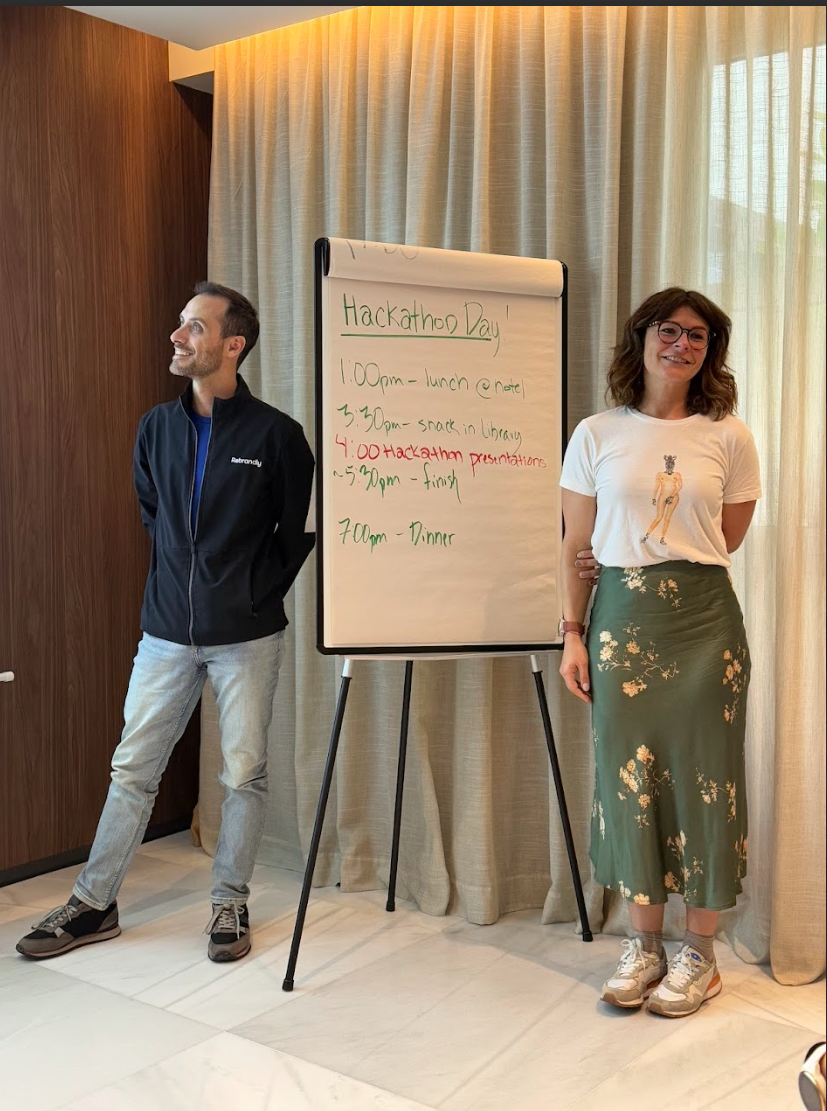
The result? A team that doesn't just tolerate AI; they use it instinctively to work better and faster.
Rethinking our values for an AI-first world
While we were transforming how we work, we also took a hard look at who we are.
After 10 years of growth, our leadership team gathered in Dublin to ask some fundamental questions: What values actually guide our decisions? Not the ones on the wall—the ones we use when making real trade-offs.
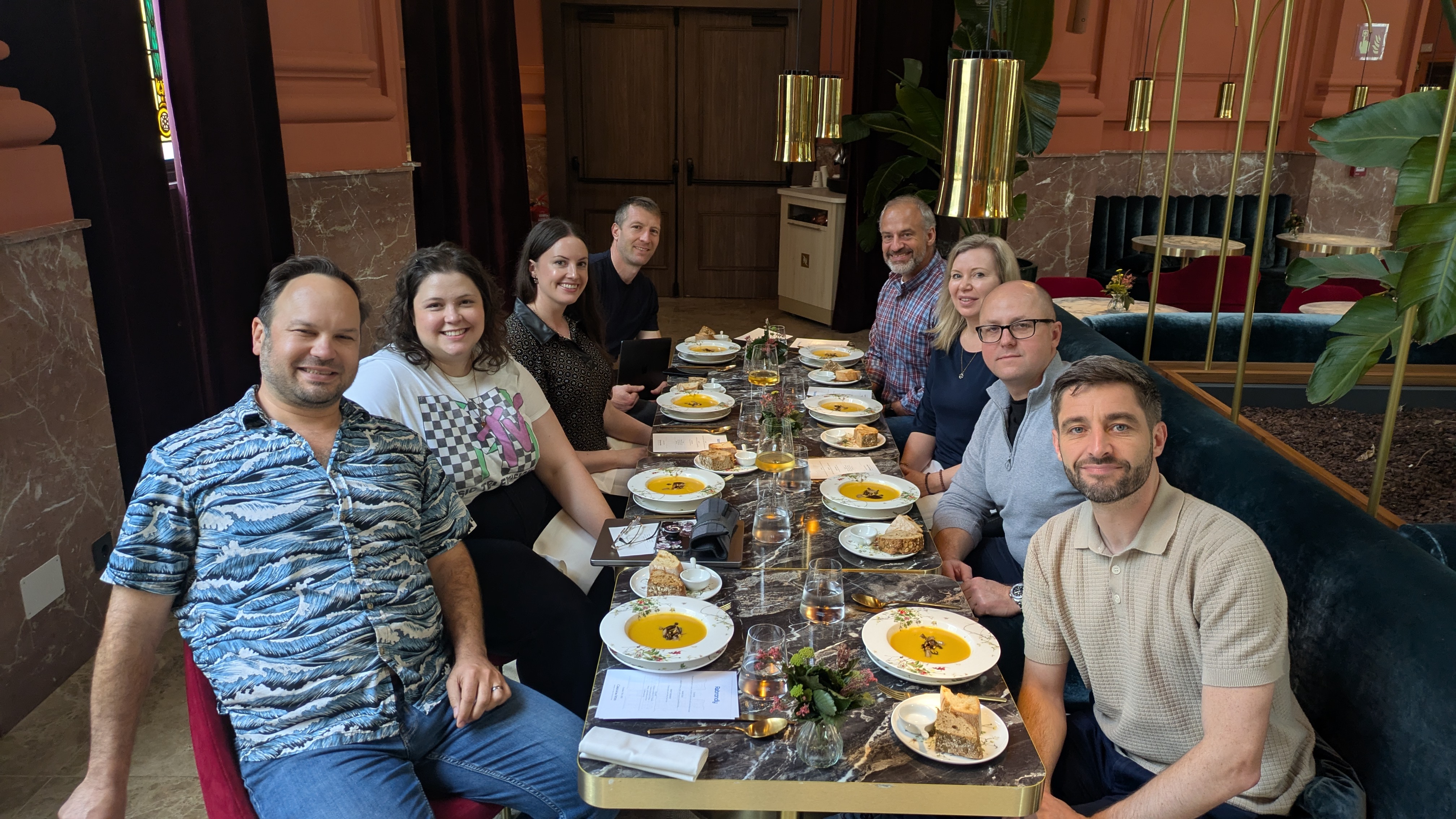
We completely reworked our company values. Not because the old ones were wrong, but because we needed something authentically ours and bold enough to guide us through what comes next. (You can read the full story here.)
These five values became our decision-making framework:
- Burning Ambition - We dream beyond the status quo
- Know Your Customer - Beyond love, into understanding
- Builder Mindset - No work is beneath us
- Transparency - The only way to run a remote company
- Courageous Collaboration - Making bold moves feel safe
These aren't inspirational wall art. They're practical tools. When engineers are doing design work and product people are prototyping—which happens constantly in an AI-accelerated environment—shared values become the common language that keeps everyone aligned.
Being transparent about our AI stack
We're builders for builders. You deserve to know how we work, what we're learning, and what actually moves the needle.
So here's exactly what we use:
- Claude/Anthropic for content creation, strategy work, and problem-solving
- GitHub Copilot for engineering productivity
- Claude Code for development workflows
- Slack AI for instant answers to internal questions
- FinAI for our support chatbot
- ClayAI for sales
- Browserstack for QA automation
- Multiple AI tools across product, design, and marketing
Why share this? Because transparency is one of our core values, and we believe the companies that pretend they're not using AI or hide their stack aren't doing anyone any favors. We're all figuring this out together.
Using AI ourselves made us better at building AI into our product. We know what feels helpful versus what feels like feature bloat. We know the difference between automation that saves time and automation that just adds complexity.
What we built this year
All of this internal transformation was in service of one goal: building better products and delivering better experiences for you.
That's why we doubled down this year on making Rebrandly the most reliable interaction tracking platform you'll find. When everything else is uncertain, we wanted to be the thing you could count on.
Here's what we shipped in 2025:
- Webhooks 2.0 - We reinforced our webhooks infrastructure to make integrations seamless and reliable. Real-time notifications when link events happen, so you can build automated workflows that actually work.
- AI URL Metadata Generator - Let AI handle the tedious work of creating link titles and descriptions. Our tool analyzes your destination URLs and automatically generates optimized metadata, saving you time while keeping your links organized and professional.
- Advanced Analytics - More visibility into your link performance with better filtering, segmentation, and custom date ranges. Understand your audience, compare campaigns, and make data-driven decisions faster. Currently available to enterprise users, but rolling out to everyone in 2026.
- Better product UX- We took a hard look at our modal patterns and rebuilt the core link creation and editing flow from the ground up. The result? Feature adoption jumped over 100%. When UX gets better, people actually use the features you built.
- Enhanced security and trust features - We continued strengthening our security infrastructure to make sure your data and your customers' data stay protected. Because reliability means nothing without trust.
- Rebrandly MCP- We released an MVP Model Context Protocol in July, and we just fully revamped and launched the complete MCP integration. MCP represents where we see integration heading: not just connecting platforms, but creating truly intelligent workflows.
What's coming in 2026
Big things. We’re building things that matter instead of building things just because we can. Here’s what you can expect to see from us in the coming year:
- Conversions tracking - You shouldn't have to wonder what's working. You should know. We're building a reliable way to track whether your clicks converted to purchases, signups, donations, or demos booked. Connect the dots between your links and the outcomes that matter to your business.
- AI-powered insights from your click data - We're thinking hard about what we can do with the data we collect. What patterns could we identify that help you make better decisions? What insights can we surface that you're not seeing today? This is where things get really interesting.
- Expanding what it means to be an interaction tracking platform - In a world where every marketing touchpoint matters more than ever, we're rethinking how links fit into the bigger picture of understanding your audience.
- Continuing to enhance our UX - The Link Edit redesign showed us what's possible when we obsess over user experience. We're not stopping there. Expect more thoughtful improvements that make the product faster, clearer, and more intuitive to use. Better UX means you'll use the features we build—and we're committed to that.
Throughout we’re staying true to what makes us different: we're a product company that actually cares about our customers. We're builders for builders. We're watching you create amazing things, and we want to be part of that journey with you.
What won’t change
AI is powerful. Automation is powerful. They should be. They're handling the tedious stuff, the repetitive tasks, the busy work that used to eat up hours of your day.
But human connection? That's more important now than ever.
%20(1).jpg)
That's why our customer support and success team isn't getting replaced. In fact, it's getting stronger. Dan, Chelsea, Iris, and Karina are here for you. Real people who know the product, who've helped thousands of customers solve real problems, who actually care about your success.
We implemented Intercom this year and added FinAI, but it's not about pushing you toward bots. It's about giving you options: quick answers when you need them, human expertise when you want it.
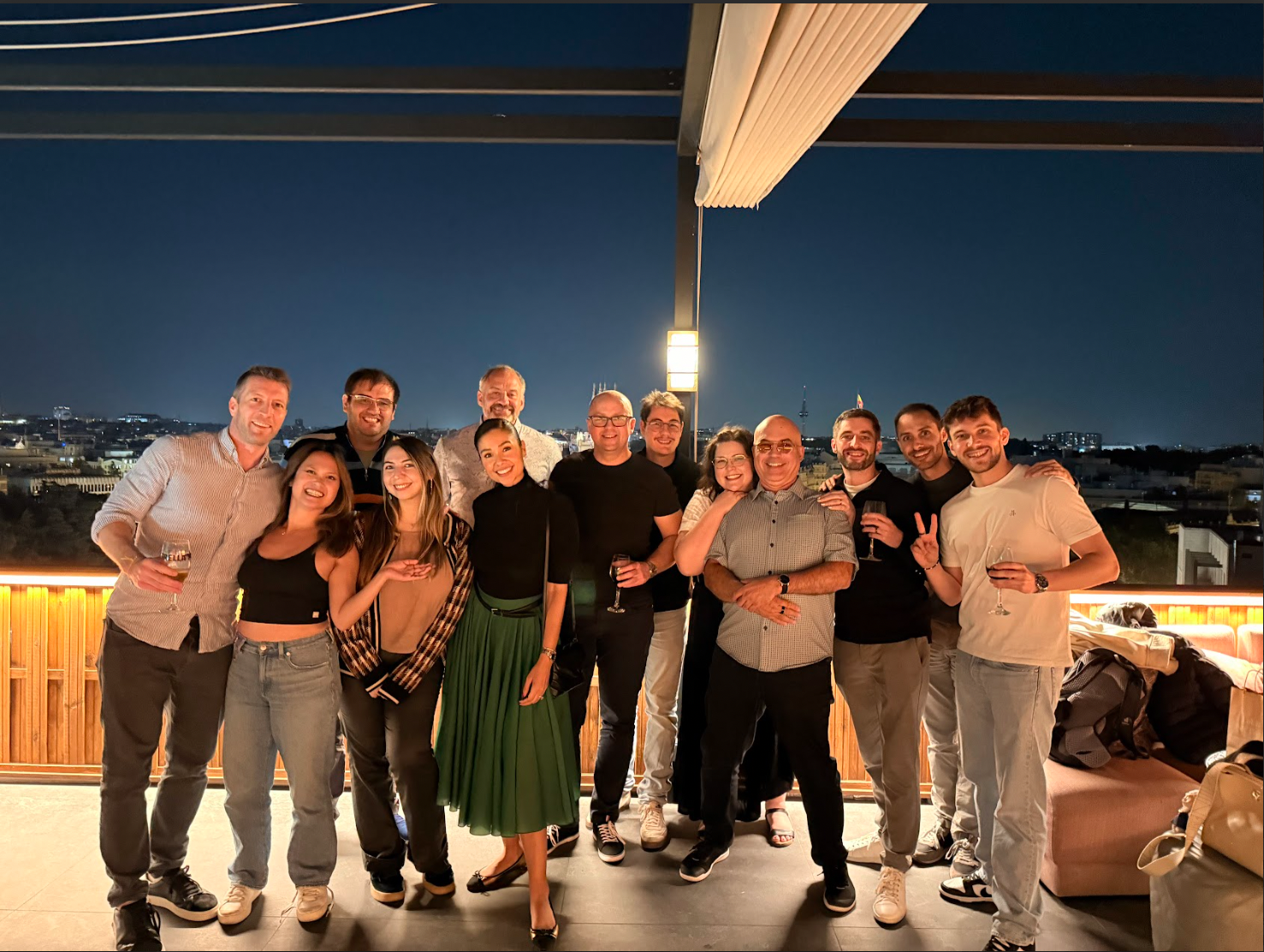
Our sales team is growing. Customer retention improved. NPS scores went up. We welcomed a dedicated customer success manager to the team. We brought everyone together for Rebrandly 10, our first company-wide in-person meetup.
This balance—powerful technology with genuine human support—that's what we're building toward.
We’re ready for whatever 2026 brings
Here's what we did in 2025:
- We kept your links working when everything else got complicated.
- We built features you actually use (and the data proves it).
- We got better at supporting you, with both AI and real humans.
- We shipped meaningful updates while being honest about our direction.
- We transformed ourselves into an AI-first company so we could build AI-first products.
The AI revolution isn't slowing down. Neither are we. But unlike companies trying to replace human connection with automation, we're doing something different: using AI to handle the tedious stuff so humans can focus on what matters.
Your growth. Your success. Your ability to track what's working and double down on it.
That's what we've done this year. And that's what we'll keep doing next year.

.webp)