Rebrandly and Short.io both offer link shortening, but Rebrandly provides greater control over where your links go, deeper analytics with Conversion Tracking, enterprise-grade security, and 99.99% uptime.
These advantages make Rebrandly the preferred choice for teams who need dependable link management, while Short.io feels more like a tool built for indie-founders on a budget.
Read on to see the main differences between Rebrandly vs. Short.io.
Key takeaways
- Rebrandly is a link intelligence platform for marketing teams, agencies, developers, and enterprises, and Short.io is an inexpensive link shortener built for solo users.
- Rebrandly's Conversion Tracking ties each link and QR code to sign-ups, purchases, and revenue, while Short.io's analytics cover the basics and need a Team plan or higher to filter stats by country or referrer.
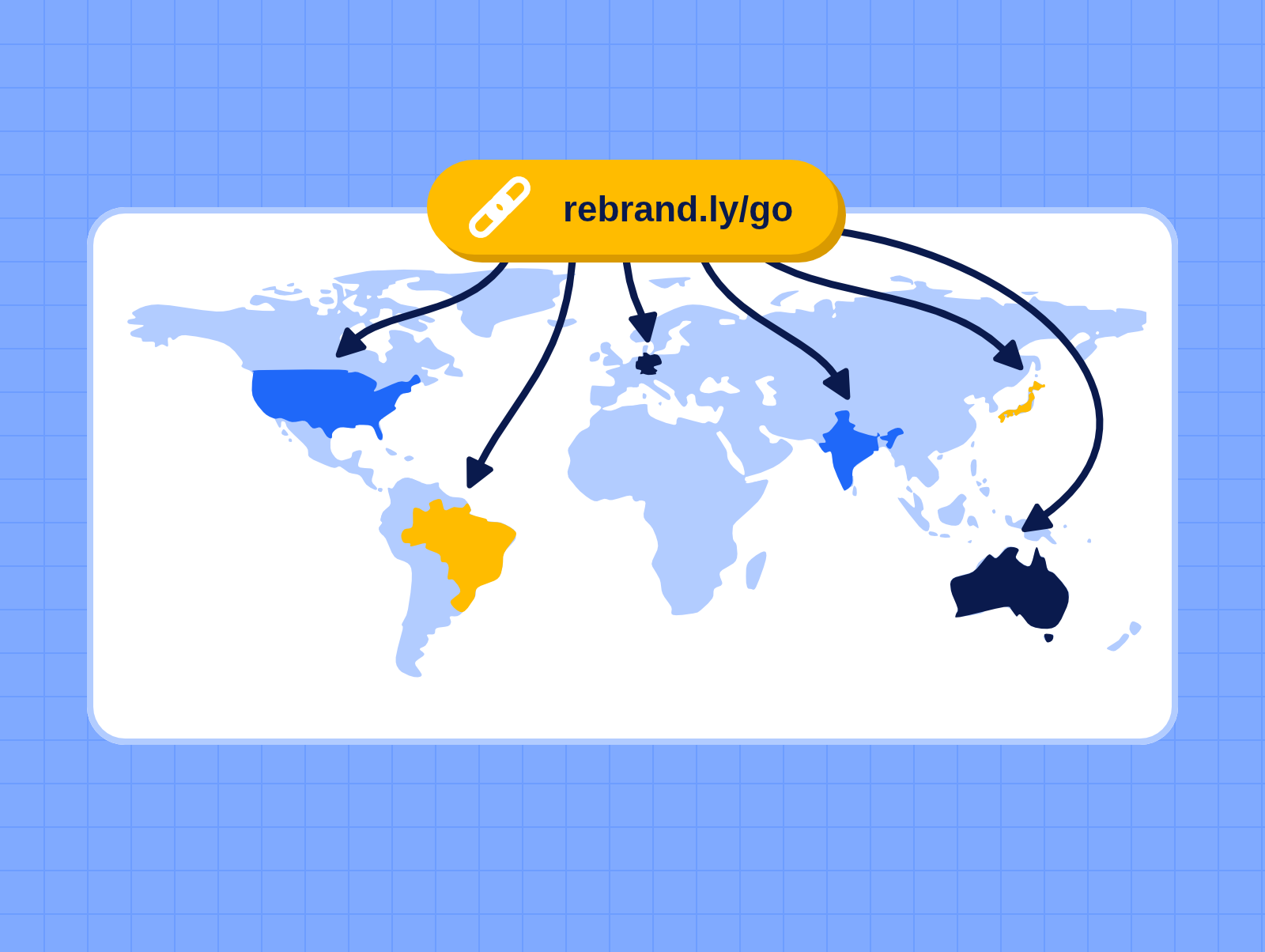
- Rebrandly dynamically routes clicks by city, language, platform, and time of day as well as country and device, and Short.io starts with device and country routing on its cheapest plans.
- Rebrandly is SOC 2, Type II and HIPAA compliant with SAML single sign-on and SCIM provisioning, and Short.io lists SOC 2, Type II, ISO 27001, and single sign-on on its Enterprise plan.
What is Rebrandly?
Rebrandly is a link intelligence platform that turns long URLs into branded links on your own domain, then tracks every click and QR code scan by location, device, referrer, and time, and uses Conversion Tracking to show which links led to sales and sign-ups.
Rebrandly launched in 2015 for teams that create links at volume and want control over each one. Think marketing teams running multichannel campaigns, agencies juggling client links, developers creating links through the API, and enterprises in regulated industries like healthcare and finance.
What is Short.io?
Short.io is a URL shortener that creates branded short links on custom domains, with routing rules, QR codes, and an API. It covers a lot of the same basics as Rebrandly, but it's aimed at a different kind of user.
When I tested Short.io for a full review, it felt like a tool built by technical founders for other technical founders. You get keyboard shortcuts, search syntax, and other nuances some people will love and others might find intimidating.
It's also one of the most affordable link tools around, with a generous free plan and paid plans that start at a few dollars a month. So it's a good fit for side projects and solo founders, but less of a fit for marketing teams or larger companies that want a more polished, fully built-out tool.
Rebrandly vs. Short.io: Key features
Those different audiences show up in the features, too. Both platforms cover the basics, like branded domains, QR codes, editable links, and an API, but they differ in how far routing goes, what the analytics tell you, how teams share access, and which compliance documents you can hand your security team.
Rebrandly features
That table covers the headline differences, and here's the fuller list of what you get with Rebrandly:
- Branded links on your own custom domains, including domains you buy inside Rebrandly
- Dynamic QR codes with your brand colors and logo
- Dynamic routing by location, device, platform, language, date, and time
- Deep links that open content inside mobile apps
- Real-time link analytics with unique clicks and bot filtering
- Conversion Tracking for sign-ups, purchases, and revenue
- Scheduled reports and data exports
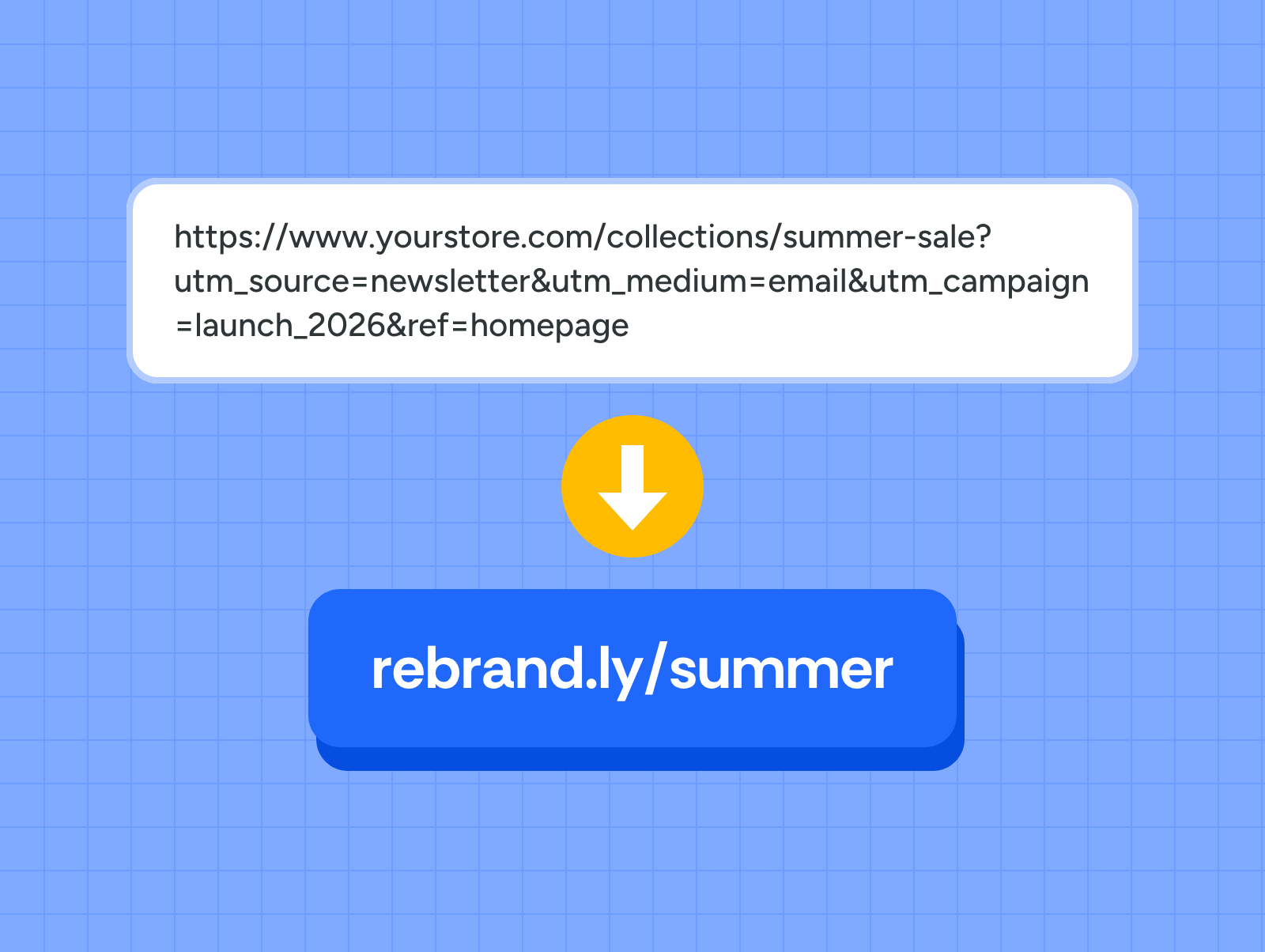
- UTM Presets with approved values and defaults
- Password-protected links and link expiration
- Link Gallery, a link in bio page on your own domain
- Workspaces with five user roles
- Bulk link creation and editing from a CSV
- A REST API, webhooks, and a Python SDK
- The Rebrandly MCP server and Claude connector
- SAML single sign-on and SCIM user provisioning
- iOS and Android apps for creating and sharing links from your phone
Short.io features
Short.io's list is shorter, but it packs a lot into its low prices. Device targeting, A/B testing, QR codes, link bundles, and an API are on every plan, including Free, and country routing starts with the cheapest paid plan.
Two features stood out when I tested it:
- Post gives you a hosted content page at a short link, with a title, cover image, and body you write in Markdown. I haven't seen it from any other link shortener, but every post looks the same since there aren't any design options.
- Bulk Create is a spreadsheet built into the dashboard, with columns for the destination, back half, UTMs, expiration, and more. You can paste rows straight from Excel or Google Sheets.
Some elements of Short.io felt unfinished or rough though. I lost unsaved work three times, I had to click through 15 tabs to find every link setting, and Short.io creates a new link the moment you paste a URL, so I found myself accidentally creating links multiple times and having to delete them.
Rebrandly vs. Short.io: Branded domains
Both Rebrandly and Short.io let you connect a domain you already own or buy a new one inside the app, and both include a free option for getting started.
Short.io's free option is a subdomain on its shared s.gy domain, and you'll need to verify a phone number before you can use it. Its terms also say free domains stay Short.io's property, so I'd treat them as a testing option and use your own domain for anything customers will see.
Rebrandly's free option is the rebrand.ly domain, and you can connect your own custom domain too on any plan. If your team runs several brands or clients, both tools let you add more domains as you grow.
If you're new to branded domains, Rebrandly's guide to shortening a link explains how generic and branded shorteners differ.
Rebrandly vs. Short.io: Routing and deep links
Once a link is on your domain, the next question is where it sends people. Both platforms support dynamic routing, so one link can send different people to different pages based on rules you set, and Rebrandly offers more of those rules.
Short.io makes routing affordable, with device targeting on its free plan, country targeting from its cheapest paid plan, and city and region targeting on its Team plan.
With Rebrandly, you can route clicks based on:
- Country
- Region
- City
- Device
- Platform
- Language
- Date
- Day of week
- Hour of day
Rebrandly's language and time conditions are important once your campaigns get more specific. For example, one link can send Spanish speakers to your Spanish page and weekend visitors to a different offer.
Deep links are on both platforms too. A deep link opens content inside a mobile app instead of the mobile browser. For an ecommerce brand, that means one product link can open your shopping app on a phone and your website on a laptop.
Rebrandly vs. Short.io: QR codes and link in bio pages
Short.io and Rebrandly both also offer dynamic QR codes so you can change where a QR code goes after you've shared it, without creating a new one.
Every Rebrandly link comes with a QR code you can customize with your brand colors and logo. You can track scans alongside link clicks, and track conversions too, so you can see which QR code led to a sale.
Three Rivers Park District used Rebrandly to manage more than 1 million QR code scans a year on signs across its parks. When a vendor change moved hundreds of destination pages, the team updated them in bulk through Rebrandly's API instead of replacing more than 300 signs.
Short.io's QR codes have the usual settings, like colors, logos, and labels, plus an AI option that draws an image into the code. It's clever (I made one with a dog for fun), but I'm not sure how practical artwork QR codes will be for most teams.
Link in bio pages are another place the two differ. Short.io's link bundles pull their design from your domain's theme settings, so two campaigns on the same domain look identical.
With Link Gallery, Rebrandly's link in bio product, you can build a fully customizable page on your own domain with your own background, brand colors, logo, and button styles. Link Gallery also shows real-time click data for every link on the page, so you can see which ones your social audience actually taps.
Rebrandly vs. Short.io: Link tracking and data analytics
Whether someone scans a QR code or clicks a link in your bio, you'll want to know how it performed. Both Rebrandly and Short.io offer link analytics, but Rebrandly goes a lot further in depth and in what you can do with the data.
Rebrandly reporting
Rebrandly Analytics tracks every click and scan, and breaks them down by:
- Country, region, state, and city
- Device, browser, and platform
- Language
- Time of day and clicks over time
- Referrer sources, including social platforms
- Unique vs. total clicks
- Bot vs. human traffic
Aggregated reporting lets you explore performance across domains, tags, and workspaces, and you can schedule reports or export data through the API. So if a campaign runs across email, SMS, and three social channels, you can compare each one from the same dashboard.
Rebrandly conversion tracking
Clicks only tell you so much, so Conversion Tracking shows which of them led to sign-ups, purchases, or downloads. To set it up, you add one script to your site and pick the events that count.
Each link and QR code then gets its own view of clicks, conversions, revenue, and drop-off, with an attribution window of up to 90 days.
Short.io reporting
Short.io gets the core numbers right. Its referrer data was accurate in my testing, and it filters out link preview bots and labels each one by name, so your click counts stay clean.
But it does have its limits. On the Free and Pro plans, you can only filter stats by date range, time zone, and human vs. bot clicks, so you can see that LinkedIn and the US both sent clicks but not how many US clicks came from LinkedIn.
Short.io also offers conversion tracking.
Rebrandly vs. Short.io: Teams, permissions, and UTMs
Analytics are only as clean as the links behind them, and keeping links organized gets harder as more people create them. Short.io's Free, Hobby, and Pro plans include one user, so you'll need its Team plan or higher for anyone else to log in.
Short.io's teams have four roles (Owner, Admin, User, and Read-only), and you can limit a User to the links they create or the ones shared with them.
Rebrandly organizes everything into workspaces, where each one has its own links, domains, and analytics for a team, brand, or client. Each person gets their own login and one of five roles:
- Owner
- Administrator
- User
- Guest
- Reviewer
Reviewers can view links and stats and leave notes without editing anything, so a client or manager can check results without any risk of changing a live link. Generation, a nonprofit in 17 countries, uses 18 Rebrandly workspaces to manage more than 10,000 links while keeping every country on the same standards.
UTM tags need the same consistency or you’ll spend more time cleaning up your data than analyzing it. For instance, analytics consultant Larry G. has seen one paid search campaign split into seven source/medium rows because people tagged it differently.
Short.io has a UTM builder and lets you save templates. Rebrandly sets UTM parameters at the workspace level, with saved UTM Presets, approved values for each parameter, defaults, and the option to hide parameters your team shouldn't edit.
Rebrandly vs. Short.io: Integrations
Teams rarely create links in just one place, so both platforms connect to other tools. Rebrandly has the bigger library of app integrations, while Short.io keeps a short list focused on automation and tracking.
Rebrandly integrations
Rebrandly's easy-to-use API and 50+ app integrations connect it with social media management platforms, SMS tools, marketing automation software, and CRM systems.
Rebrandly integrations include:
View the entire list of Rebrandly integrations.
For developers, the REST API comes with webhooks, developer documentation, and a Python SDK. It's built for high volume, and Wonder Cave, a text messaging platform, relies on it to give every recipient their own branded link (its CTO says Rebrandly can create "more than a million links in a minute").
If your team uses AI assistants, the Rebrandly MCP server and Claude connector let you create links and ask about your analytics in plain language from Claude, ChatGPT, Cursor, Gemini, and others.
Short.io integrations
Short.io's integrations page lists 13 integrations, including Zapier, Make, Segment, Google Analytics, Google Tag Manager, Meta Pixel, Slack, browser extensions, and its iOS and Android apps. Its API is on every plan, at up to 50 requests a second.
Rebrandly vs. Short.io: Security and compliance
Both platforms have SOC 2, Type II audits, and Rebrandly adds HIPAA compliance across the platform and SCIM user provisioning for enterprise teams. That's especially important for organizations handling sensitive customer information and first-party data.
Rebrandly security
Rebrandly signs Business Associate Agreements (BAAs), the contract healthcare organizations need before a vendor handles protected health information. Rebrandly supports highly regulated industries like healthcare, finance, government, and enterprise technology, with security standards that include:
- GDPR and CCPA compliance
- Annual SOC 2, Type II audits
- Regular third-party penetration testing
- Abuse management, malware detection, and AI-powered spam detection
- Domain security and intelligence monitoring
- SAML 2.0 single sign-on and SCIM user provisioning with Okta, Microsoft Entra ID, Google Workspace, and OneLogin
- Link expiration, password protection, and user-based permissions
Cochlear Americas, the US division of the cochlear implant maker, uses Rebrandly's branded links and QR codes on its own cochlear.us domain across presentations and promotional materials, with the HIPAA compliance its industry requires. (Rebrandly's guide to HIPAA compliant link shorteners covers what to look for.)
If your security team wants to review Rebrandly first, the Rebrandly Trust Center has its SOC 2 reports and penetration test results.
Short.io security
Short.io's Enterprise page lists SOC 2, Type II, ISO 27001, GDPR, and CCPA, and says it can sign BAAs for healthcare organizations. Its SAML single sign-on works with Okta, Azure AD, Google Workspace, and others, but it's only on the Enterprise plan, and the page doesn't mention SCIM provisioning.
Short.io also takes abuse seriously, and you have to verify a phone number before you can use its free domain. When I shortened a harmless page Google built for testing phishing filters and clicked the link, Short.io locked my whole account within seconds, so one flagged link can lock everyone out.
Rebrandly vs. Short.io: Pricing
Both platforms have free and paid plans. The prices below are billed annually (both also offer monthly subscriptions):
For a closer look at how Short.io counts links on each plan, check out our Short.io pricing breakdown, or see what each Rebrandly plan includes on our pricing page.
Rebrandly vs. Short.io: Which should you choose?
Price is one part of the decision, and how your team works with links is the other.
Choose Rebrandly if:
- You want to see which links and QR codes lead to revenue
- Several people create links, and you need separate roles, workspaces, and consistent UTMs
- You route traffic by city, language, or time of day
- You work in a regulated industry like healthcare or finance and need a compliance-minded URL shortener
- You send high-volume SMS or create links through an API
- You want a polished link in bio page on your own domain
- Your team is mostly marketers who want links that just work
Choose Short.io if:
- You're a technical founder or solo user on a budget
- You'd use Post for quick hosted content pages
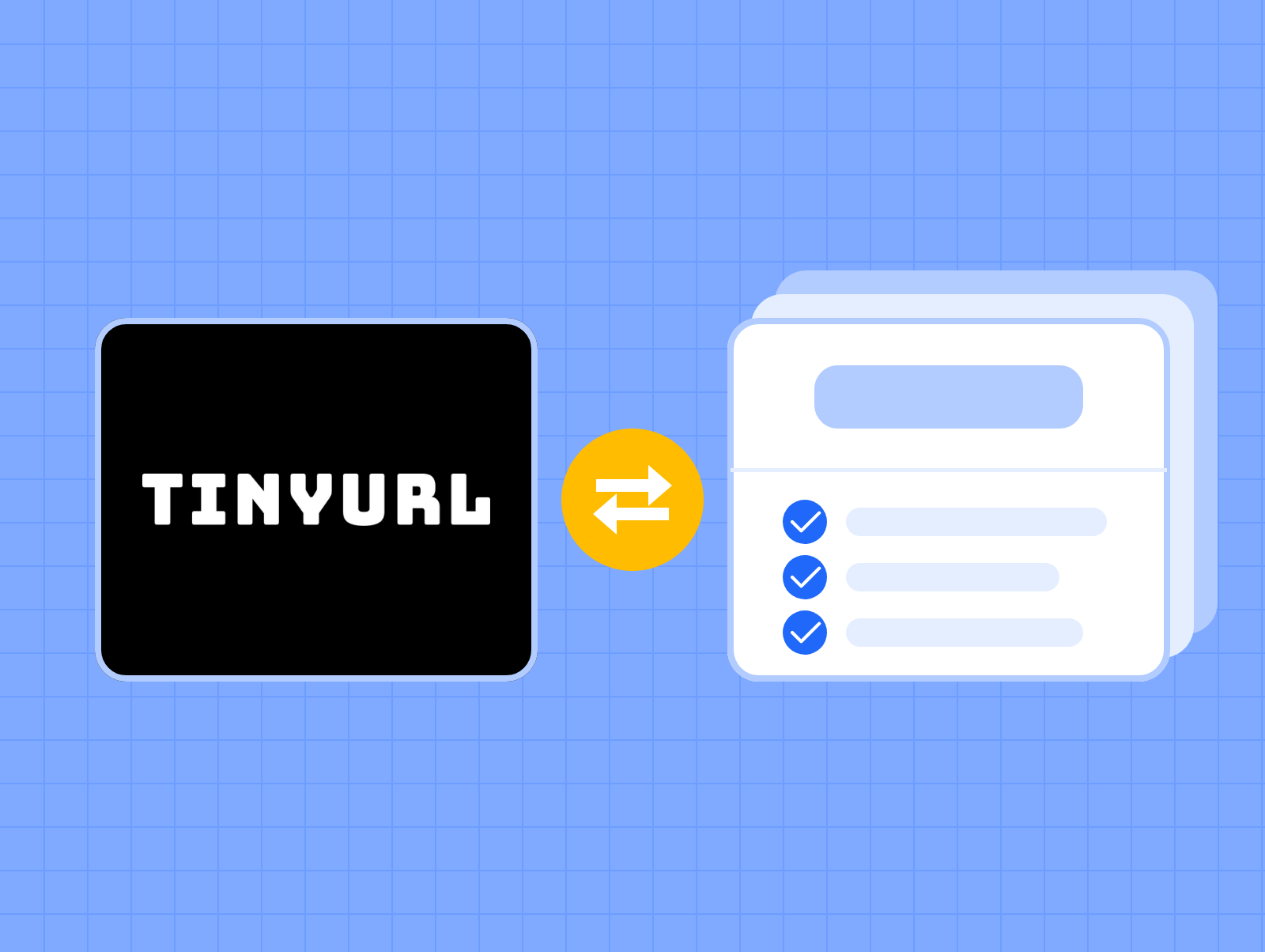
How to switch from Short.io to Rebrandly
If you already use Short.io, the move comes down to your links and your domain. As long as your links are on a domain you own, they keep working once that domain points to Rebrandly, so it helps to go in this order:
- Export your links from Short.io as a CSV file. Short.io's export isn't turned on by default, so ask its support team to enable it, then export all the links on a domain from that domain's settings.
- Clean up the CSV so it has two columns, the branded short link and its destination URL. Rebrandly will import multiple short links with the same destination URL, but it can't import duplicates of the same branded link.
- Add your domain to your Rebrandly account, but skip the DNS update for now so your links keep working in Short.io.
- Upload the CSV to create all your links in Rebrandly at once.
- Point your domain's DNS to Rebrandly's servers. DNS propagation can take up to 24 hours, and your links keep working the whole time, with some visitors reaching Short.io and others reaching Rebrandly until the switch finishes.
- Add tags, workspaces, and UTM Presets to your imported links.
If you're using a free s.gy subdomain, your links can't move with it, since the domain belongs to Short.io. In that case, set up your own domain in Rebrandly and update the places where you've shared the old links.
For larger libraries, I'd test before you switch over.
Short.io is built for tinkerers, and Rebrandly is built for teams
Short.io earns its spot if you're one technical person who wants a lot of links for very little money. For a marketing team, it takes more tuning and more upgrades than most people want to deal with.
When evaluating link management providers, Rebrandly is a comprehensive solution for businesses, agencies, and developers requiring advanced security, complete data ownership, and powerful analytics capabilities.
Get started with Rebrandly for free and connect your own branded domain today.
Frequently asked questions about Rebrandly vs. Short.io
Is Rebrandly or Short.io better for a small business?
It depends on who's creating the links. Short.io is cheaper for a solo, technical owner.
Rebrandly is easier for a small marketing team, and Conversion Tracking shows which of your links bring in customers.
Which is better for agencies managing several clients?
Rebrandly is usually the better fit for agencies, since you can give each client a separate workspace with its own branded domain, links, and analytics. You can also schedule reports for each client instead of pulling numbers by hand.
Which is better for managing short links on your phone?
Both have iOS and Android apps, so you can create and share links from your phone with either one. Short.io's Free, Hobby, and Pro plans include one user, though, so a team sharing links from several phones will need its Team plan.
Which is better for SMS and email campaigns?
Rebrandly is the stronger choice for messaging, because every text and email can carry a branded link on your own domain. Some SMS providers list public shorteners as commonly blocked by carriers, and Rebrandly for SMS adds Real-Time Link Validation to catch risky links before a message goes out.
What are the best Short.io alternatives?
Rebrandly is the best overall Short.io alternative for businesses, especially teams that need Conversion Tracking, workspaces, and compliance. For more options, our roundup of the best URL shorteners compares five tools by who each one fits.